
What would a rate hike signal about the new Fed chief's MO?
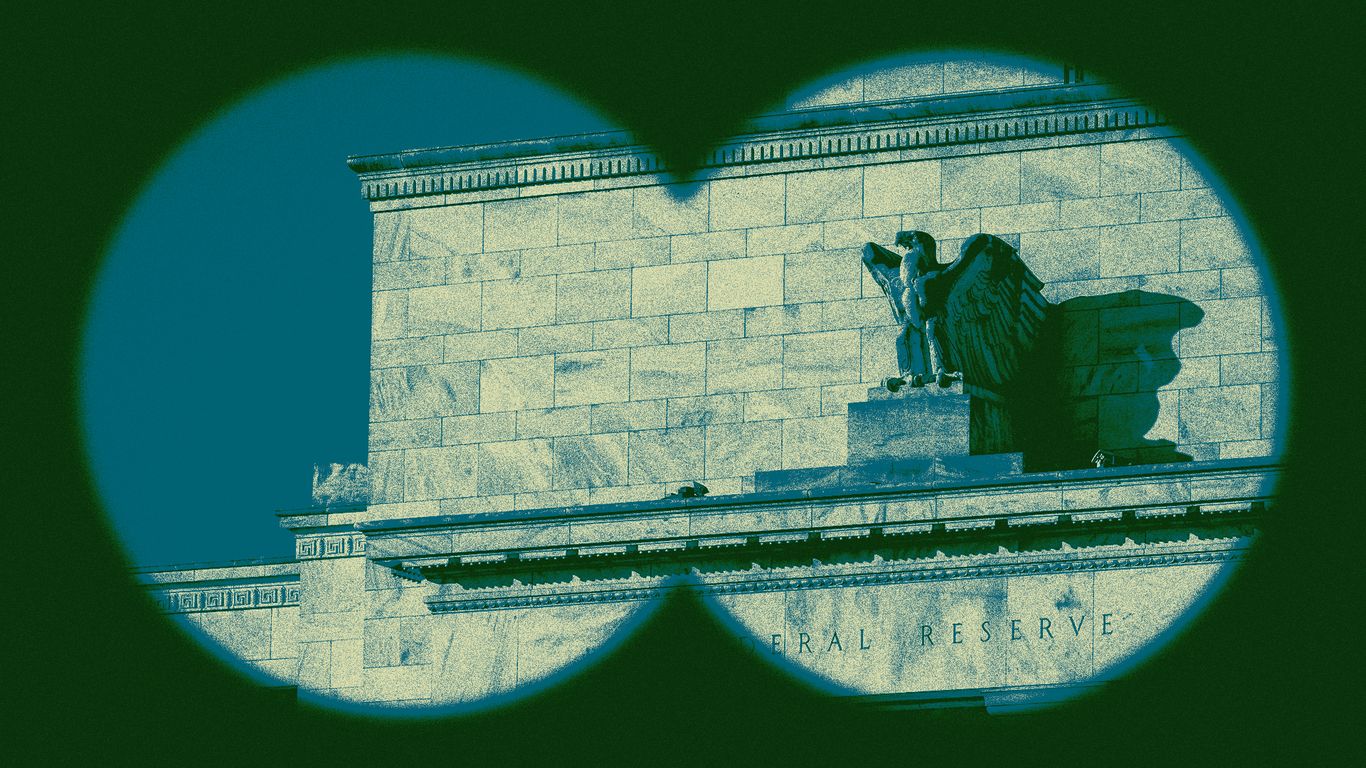
The Federal Reserve typically telegraphs its interest rate moves in advance, then follows through. This week will provide the clearest evidence yet on whether chairman Kevin Warsh is ending the era of the no-surprises Fed.The big picture: Markets are now putting meaningful odds on the Fed delivering an interest rate hike at the conclusion of its two-day meeting this week.If the Federal Open Market Committee were to do so, it would suggest a new era in which the central bank is less predictable — accepting more volatility and surprise as the price to be paid for greater policy nimbleness.State of play: In the final public communications before the Fed entered its pre-meeting blackout period, signs were pointing to the FOMC leaving rates unchanged at this meeting, but holding out the possibility of a future rate hike if inflation doesn't move down.Since then, there has been a re-escalation of hostilities in the Persian Gulf that sent oil prices and longer-term bond yields upward.That led traders to put greater weight on the possibility of a rate hike — currently about 34% in the CME's FedWatch tool, up from 16% a week ago.Zoom out: Warsh often speaks of not pre-judging the outcome of policy meetings and of officials going in with an open mind and having a "family fight" decide optimal policy.That would imply a wider aperture of potential moves (or non-moves) than has been the norm under his immediate predecessors.Yes, but: The flip side of greater agility in policy is that there is more risk of appearing skittish and overly reactive to the latest headlines.If Fed officials were inclined to be a bit more patient on raising rates 10 days ago, should a $10 move in the price of crude oil (much of which has already reversed itself) really shake those plans?Warsh will face pressure in a post-meeting news conference Wednesday to explain either a move or non-move more clearly than he has been inclined to do in his public comments to date.What they're saying: "Since markets have priced in about a one-third chance at this meeting, there will be some surprise no matter what the FOMC does," Bill English, a former top Fed economist, tells Axios."They should do the right thing, given the information they have," adds English, now a professor at the Yale School of Management.
Reported by 3 outlets — Axios, Investing.com · Economy. See all sources ↓
The Federal Reserve typically telegraphs its interest rate moves in advance, then follows through. This week will provide the clearest evidence yet on whether chairman Kevin Warsh is ending the era of the no-surprises Fed.The big picture: Markets are now putting meaningful odds on the Fed delivering an interest rate hike at the conclusion of its two-day meeting this week.If the Federal Open Market Committee were to do so, it would suggest a new era in which the central bank is less predictable — accepting more volatility and surprise as the price to be paid for greater policy nimbleness.State of play: In the final public communications before the Fed entered its pre-meeting blackout period, signs were pointing to the FOMC leaving rates unchanged at this meeting, but holding out the possibility of a future rate hike if inflation doesn't move down.Since then, there has been a re-escalation of hostilities in the Persian Gulf that sent oil prices and longer-term bond yields upward.That led traders to put greater weight on the possibility of a rate hike — currently about 34% in the CME's FedWatch tool, up from 16% a week ago.Zoom out: Warsh often speaks of not pre-judging the outcome of policy meetings and of officials going in with an open mind and having a "family fight" decide optimal policy.That would imply a wider aperture of potential moves (or non-moves) than has been the norm under his immediate predecessors.Yes, but: The flip side of greater agility in policy is that there is more risk of appearing skittish and overly reactive to the latest headlines.If Fed officials were inclined to be a bit more patient on raising rates 10 days ago, should a $10 move in the price of crude oil (much of which has already reversed itself) really shake those plans?Warsh will face pressure in a post-meeting news conference Wednesday to explain either a move or non-move more clearly than he has been inclined to do in his public comments to date.What they're saying: "Since markets have priced in about a one-third chance at this meeting, there will be some surprise no matter what the FOMC does," Bill English, a former top Fed economist, tells Axios."They should do the right thing, given the information they have," adds English, now a professor at the Yale School of Management. "I don't see a problem with the Committee surprising markets at a particular meeting — that should happen from time to time," he says. "But I do see a problem with not explaining the reasoning behind a move (or lack of move) because that could lead markets to react unexpectedly."Of note: The European Central Bank left interest rates unchanged last week, with Warsh's European counterpart Christine Lagarde arguing that policymakers could not overinterpret fast-moving swings in oil prices while the conflict remained unresolved."We have seen so abrupt changes, occurring in a matter of days, not just in terms of the level of the conflict but also the consequences in terms of energy prices," Lagarde told reporters.A brief history of surprise Fed rate movesIn recent decades, the Fed has surprised markets most often when it aims to send a deliberate shock through the system.In the 2008 global financial crisis, and again in the 2020 onset of the pandemic, several emergency meetings resulted in supersized rate cuts, intended to instill confidence that the Fed wouldn't allow an economic collapse.Conversely, supersized interest rate hikes starting in June 2022 hoped to signal the Fed's resolve to contain inflation.The intrigue: Those were undertaken in extreme circumstances — not just routine adjustments to try to recalibrate rates based on the state of the economy, but rather moments when the surprise itself was part of the goal.And even in those cases, the moves weren't complete shocks on the day of the meeting.
Read the full report at Axios ↗
Why it matters
3 outlets are covering this world story — one to watch as reporting develops.
- What's the story?
- The Federal Reserve typically telegraphs its interest rate moves in advance, then follows through. This week will provide the clearest evidence yet on whether chairman Kevin Warsh is ending the era of the no-surprises Fed.The big picture: Markets are now putting meaningful odds on the Fed delivering an interest rate hike at the conclusion of its two-day meeting this week.If the Federal Open Market Committee were to do so, it would suggest a new era in which the central bank is less predictable — accepting more volatility and surprise as the price to be paid for greater policy nimbleness.State of play: In the final public communications before the Fed entered its pre-meeting blackout period, signs were pointing to the FOMC leaving rates unchanged at this meeting, but holding out the possibility of a future rate hike if inflation doesn't move down.Since then, there has been a re-escalation of hostilities in the Persian Gulf that sent oil prices and longer-term bond yields upward.That led traders to put greater weight on the possibility of a rate hike — currently about 34% in the CME's FedWatch tool, up from 16% a week ago.Zoom out: Warsh often speaks of not pre-judging the outcome of policy meetings and of officials going in with an open mind and having a "family fight" decide optimal policy.That would imply a wider aperture of potential moves (or non-moves) than has been the norm under his immediate predecessors.Yes, but: The flip side of greater agility in policy is that there is more risk of appearing skittish and overly reactive to the latest headlines.If Fed officials were inclined to be a bit more patient on raising rates 10 days ago, should a $10 move in the price of crude oil (much of which has already reversed itself) really shake those plans?Warsh will face pressure in a post-meeting news conference Wednesday to explain either a move or non-move more clearly than he has been inclined to do in his public comments to date.What they're saying: "Since markets have priced in about a one-third chance at this meeting, there will be some surprise no matter what the FOMC does," Bill English, a former top Fed economist, tells Axios."They should do the right thing, given the information they have," adds English, now a professor at the Yale School of Management.
- How widely is it covered?
- 3 outlets, average source rating 6.3/10.
- When was it last updated?
- 10m ago.
How outlets are framing the same story
Here's how each outlet is covering the story — compare their headlines and timing at a glance.
- Coverage card1 outlet1CoverageScouting report
What would a rate hike signal about the new Fed chief's MO?
Sources1TypeCoverageAxios
- Coverage card1 outlet2CoverageScouting report
Fed decision this week "unusually uncertain," Goldman says
Sources1TypeCoverageInvesting.com · Economy