
OpenAI's first branded hardware is... a light-up keyboard?
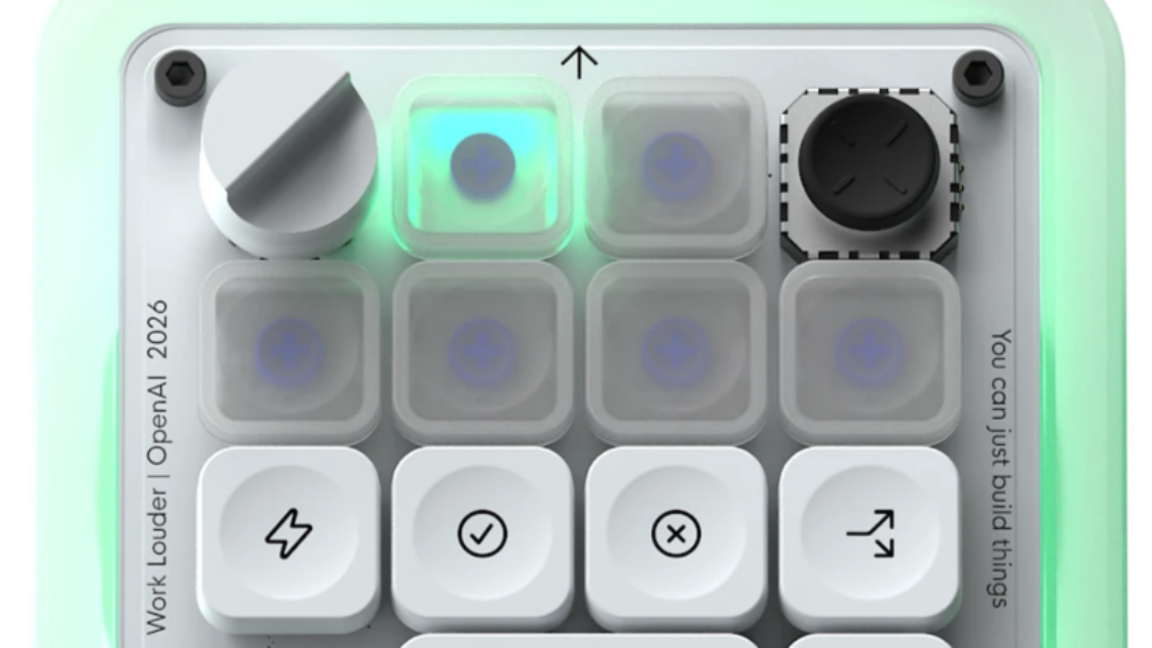

As rumors continue to swirl about OpenAI's work on a personalized smart speaker and other hardware, the company is today rolling out its first branded device. The $230 Codex Micro is a specialized, RGB-lit mini-keyboard designed to let users monitor and quickly interact with multiple Codex agents with a glance and a few clicks.
Reported by 3 outlets — Ars Technica, Business Insider, The Verge. See all sources ↓
As rumors continue to swirl about OpenAI's work on a personalized smart speaker and other hardware, the company is today rolling out its first branded device. The $230 Codex Micro is a specialized, RGB-lit mini-keyboard designed to let users monitor and quickly interact with multiple Codex agents with a glance and a few clicks. The device is described as a "limited-run collaboration" with Work Louder, which already sells a very similar-looking Creator Micro line of customizable square keyboards targeted at creative professionals. The Codex Micro differentiates itself from those mainly through six frosted keys in the top two rows, which offer color-coded live feedback on up to six Codex threads, even when they are not in focus on-screen.
Read the full report at Ars Technica ↗
Why it matters
3 outlets are covering this world story — one to watch as reporting develops.
- What's the story?
- As rumors continue to swirl about OpenAI's work on a personalized smart speaker and other hardware, the company is today rolling out its first branded device. The $230 Codex Micro is a specialized, RGB-lit mini-keyboard designed to let users monitor and quickly interact with multiple Codex agents with a glance and a few clicks.
- How widely is it covered?
- 3 outlets, average source rating 6.3/10.
- When was it last updated?
- 5m ago.
How outlets are framing the same story
Here's how each outlet is covering the story — compare their headlines and timing at a glance.
- Coverage card3 outlets1CoverageScouting report
OpenAI's first branded hardware is... a light-up keyboard?
Sources3TypeCoverageArs Technica
Business Insider
The Verge