
NATO Is Going Strong, Actually
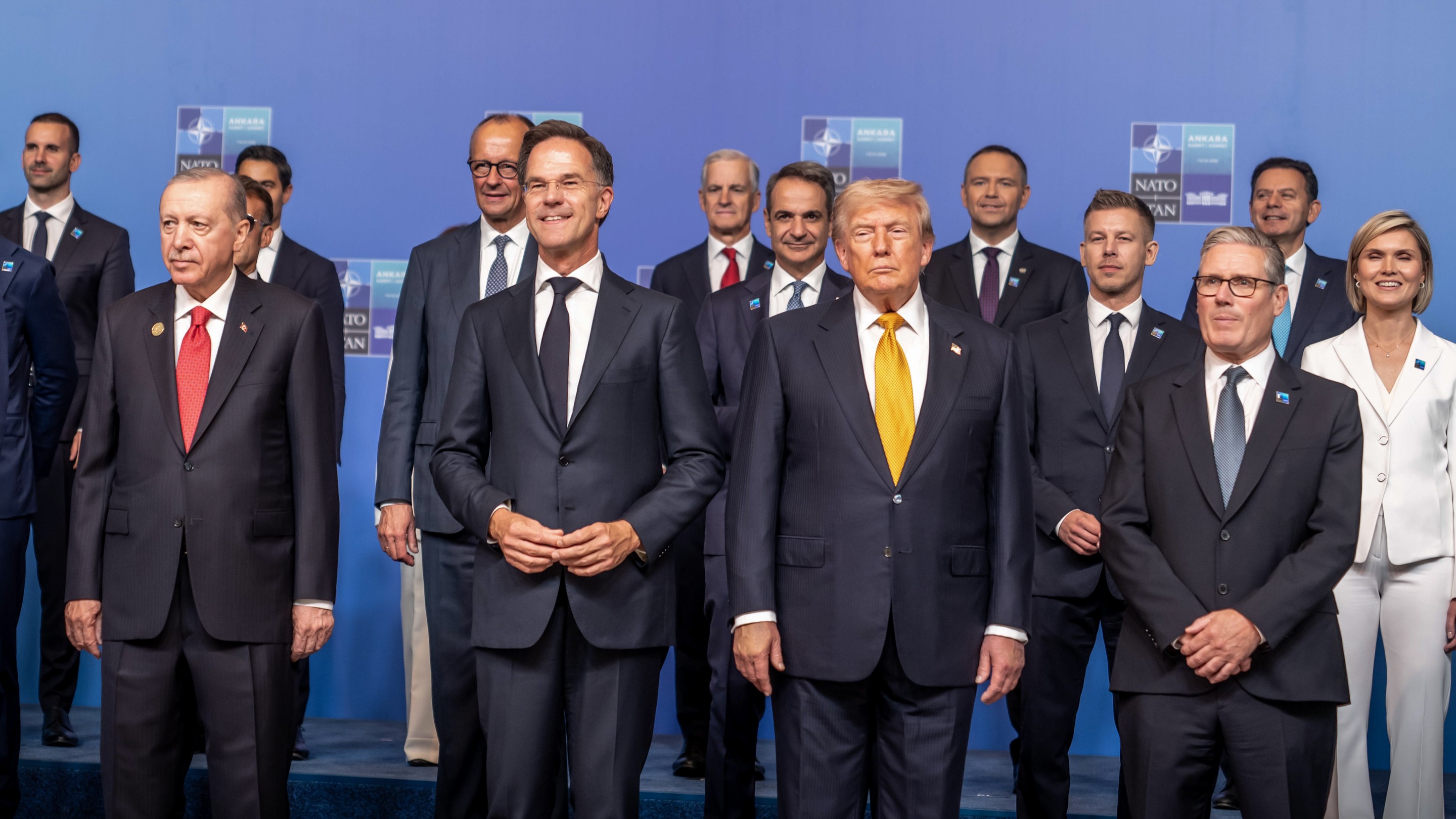
Donald Trump has long treated NATO like a punching bag, leading many observers to proclaim the demise of the Western alliance. Some analysts have called NATO “a zombie alliance.” Others have announced that the United States is decoupling from Europe, or have pronounced the North Atlantic pact “dead in the water.”And yet, the quiet reality is that NATO, albeit wounded, is actually going strong. The alliance is resilient enough to withstand the abuse heaped upon it by a U.S. president, and too vital to the security of its members for either Europeans or Americans to allow it to fall prey to Trump’s whims.The abuse has been plentiful. True to form, at the NATO summit in Ankara, Turkey, last week, Trump chastised America’s “hopeless” NATO partners for sitting on the sidelines during the U.S. conflict with Iran and spending too little on defense. He threatened to cut off trade with Spain, whose prime minister has been an outspoken critic of the Iran war, and whose spending on defense lags behind other allies. Trump even resurrected his push to wrest control of Greenland from Denmark, prompting the Danish prime minister to insist that her country would defend “every inch” of its territory.Trump is doing real damage to the Western alliance. He is eroding the trust that undergirds collective defense and giving the Europeans no choice but to wonder whether he might just pull the plug, leaving them in the lurch should they face aggression. That uncertainty weakens deterrence, perhaps tempting Russia to test the U.S. commitment to Europe. The insults also alienate European publics, imposing political costs on European leaders as they work to steady relations with the United States.[Isaac Stanley-Becker: Europe without America]But the facts speak louder than Trump’s demeaning rhetoric. Some 80,000 U.S. troops remain in Europe. They operate from about 50 bases across the continent. Most European members of NATO are in the process of acting on Trump’s call for major increases in defense spending; they aim to become more self-reliant and to fill the gaps that will open as Trump trims U.S. force levels in Europe. In Ankara, allies announced close to $50 billion in new defense contracts, another $30 billion in investments in energy infrastructure, and $80 billion in military assistance to Ukraine both this year and next. That’s real money.True, Trump sees the war in Ukraine as Europe’s problem, not America’s, and is looking to Europeans to foot the bill for sending U.S. weapons to the embattled country. Yet Trump indicated in Ankara that he was ready to provide Ukraine the licenses it needs to produce Patriot missiles, the U.S. air interceptors that Kyiv desperately needs in order to protect itself against Russia’s ballistic missiles. In the meantime, Washington still provides Ukraine with crucial military intelligence.At NATO’s Brussels headquarters, delegations from the alliance’s 32 member states continue to engage in day-to-day diplomacy. NATO Secretary General Mark Rutte has bent over backwards to fashion a solid relationship with Trump. Although the embrace has not stopped Trump’s broadsides against NATO, Rutte has effectively made the case that allies are responding quickly and decisively to Washington’s demand that they shoulder more of the burden of common defense. As Rutte told Trump last week, “Grab the win.” A little more than 30 miles away, at NATO’s military headquarters in Mons, officers from allied nations develop operational plans and work to integrate their forces. NATO’s supreme allied commander is, and always has been, a top American officer. In short, NATO is still NATO.The alliance is weathering the Trump era because of a simple reality: Europe and the United States still need each other. Russia is for now focusing its territorial ambitions on Ukraine, but a country on NATO’s eastern flank could be next. And although Europeans are investing in their own defense, they still need U.S. military power to deter and, if necessary, defeat Russia. Trump’s disparaging treatment of NATO allies has given them cause to walk away from the transatlantic partnership—but they simply cannot afford to. Instead, the Europeans are doing exactly what they should be doing: playing the long game, trying to keep Trump on side, and riding out his presidency.The United States has compelling reasons to stay tethered to its NATO allies, too. As Americans learned the hard way during the 1930s, preventing the domination of Eurasia by a hostile power is a vital national interest. The presence of U.S. forces in Europe and the reach of the U.S. nuclear umbrella deters Russia, helping preserve a stable balance of power and reducing the risk of another great-power war. America’s forward presence in Europe also serves as a launch pad for the projection of U.S. power into the Middle East, South Asia, and Africa. Bases in Europe are essential to maintaining America’s global reach.[Rosie Gray: NATO, meet Donald Trump]Some European countries have restricted U.S. access to bases on their territory during the current conflict with Iran. But more often than not, European and American soldiers are on the same team. As Yugoslavia unraveled during the 1990s, the United States had Europe’s back; NATO intervened and successfully stopped the bloodshed. After 9/11, Europe had America’s back; NATO invoked its collective-defense provision for the first time in its history, and European troops soon arrived in Afghanistan to fight alongside U.S. soldiers. NATO similarly contributed to the U.S.-led war against the Islamic State that started in 2014. In matters of national security, the United States has no better partners than its allies in Europe. NATO rightly enjoys solid, bipartisan support in Congress and among the U.S. public.The bottom line is that NATO has been going strong for almost eight decades because it rests on a deep set of common interests and shared values. Trump regularly overlooks these common interests and corrupts these shared values, but he is unable to break an alliance that has enduring strength. Ever mercurial, Trump himself sometimes appreciates this lasting transatlantic bond. At the press conference that closed the Ankara summit, he quipped, “There was a lot of love in that room, a lot of unity.” That’s about as good as it gets in the Trump era.