
NASA’s Perseverance Rover Reads Record of Ancient Mars Impacts
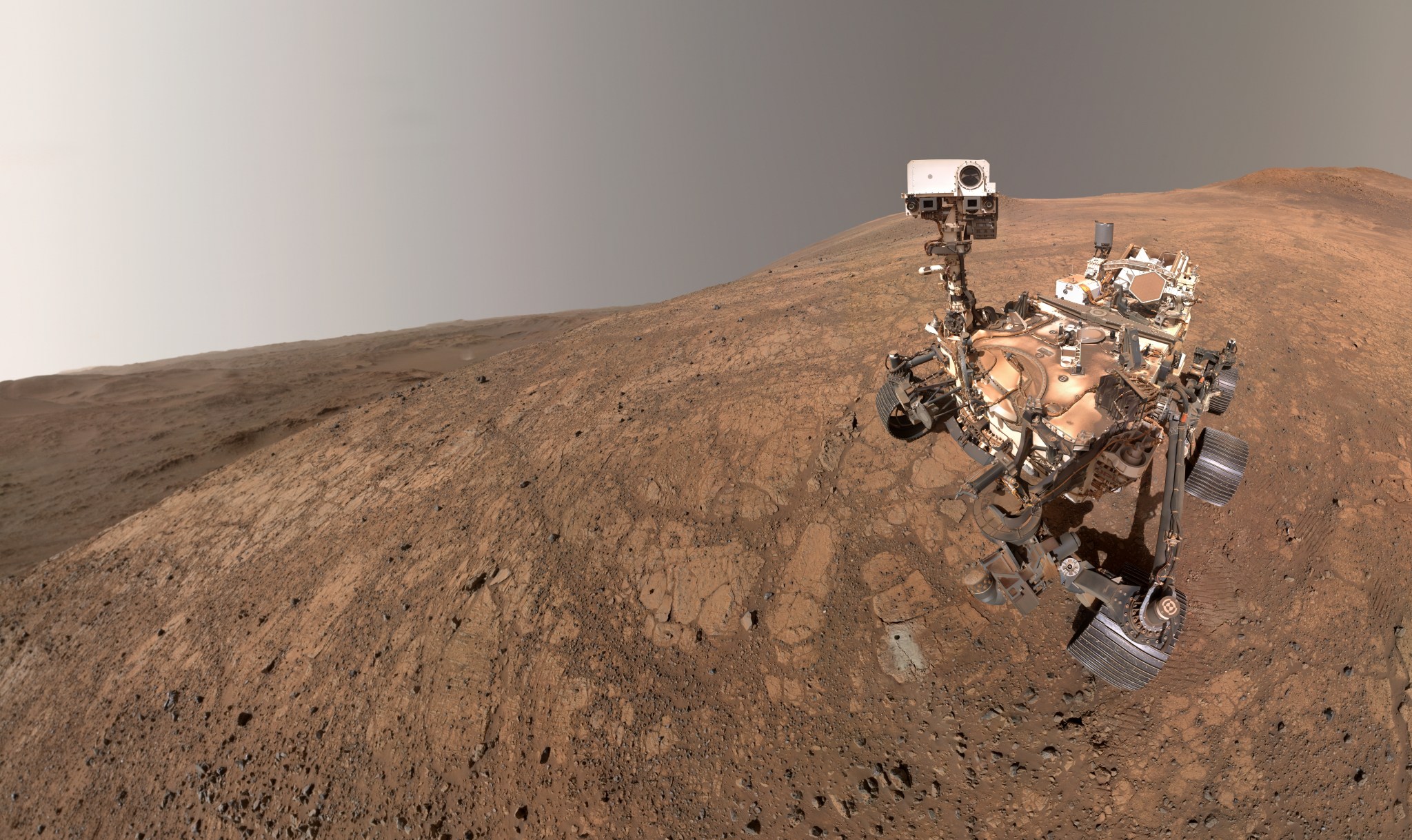
5 min readPreparations for Next Moonwalk Simulations Underway (and Underwater) NASA’s Perseverance took this selfie at “Witch Hazel Hill” on Jezero Crater’s rim on May 10, 2025. The small dark hole in the rock in front of the rover is the borehole made when the rover collected the “Bell Island” sample.
Reported by 1 outlet — NASA. See all sources ↓
5 min readPreparations for Next Moonwalk Simulations Underway (and Underwater) NASA’s Perseverance took this selfie at “Witch Hazel Hill” on Jezero Crater’s rim on May 10, 2025. The small dark hole in the rock in front of the rover is the borehole made when the rover collected the “Bell Island” sample. The small puff of dust left of center and below the horizon line is a dust devil.NASA/JPL-Caltech/MSSS NASA’s Perseverance Mars rover has uncovered evidence that a 245-foot-thick (75-meter-thick) stack of ancient rock on the rim of Jezero Crater was built by repeated asteroid impacts. Referred to as the “Broom Point member” by the rover’s science team, this sequence of layered bedrock is likely more than 3.9 billion years old, making it among the oldest terrain ever examined by a Mars rover.
Read the full report at NASA ↗
Why it matters
A world story we're tracking; its significance and source trust firm up as more outlets confirm it.
- What's the story?
- 5 min readPreparations for Next Moonwalk Simulations Underway (and Underwater) NASA’s Perseverance took this selfie at “Witch Hazel Hill” on Jezero Crater’s rim on May 10, 2025. The small dark hole in the rock in front of the rover is the borehole made when the rover collected the “Bell Island” sample.
- How widely is it covered?
- 1 outlet, average source rating 9.0/10.
- When was it last updated?
- 14m ago.
How outlets are framing the same story
Here's how each outlet is covering the story — compare their headlines and timing at a glance.
- Coverage card1 outlet1CoverageScouting report
NASA’s Perseverance Rover Reads Record of Ancient Mars Impacts
Sources1TypeCoverageNASA