
Millionaires’ playground Marbella wants to become a tech hub
Reported by 1 outlet — Fortune. See all sources ↓
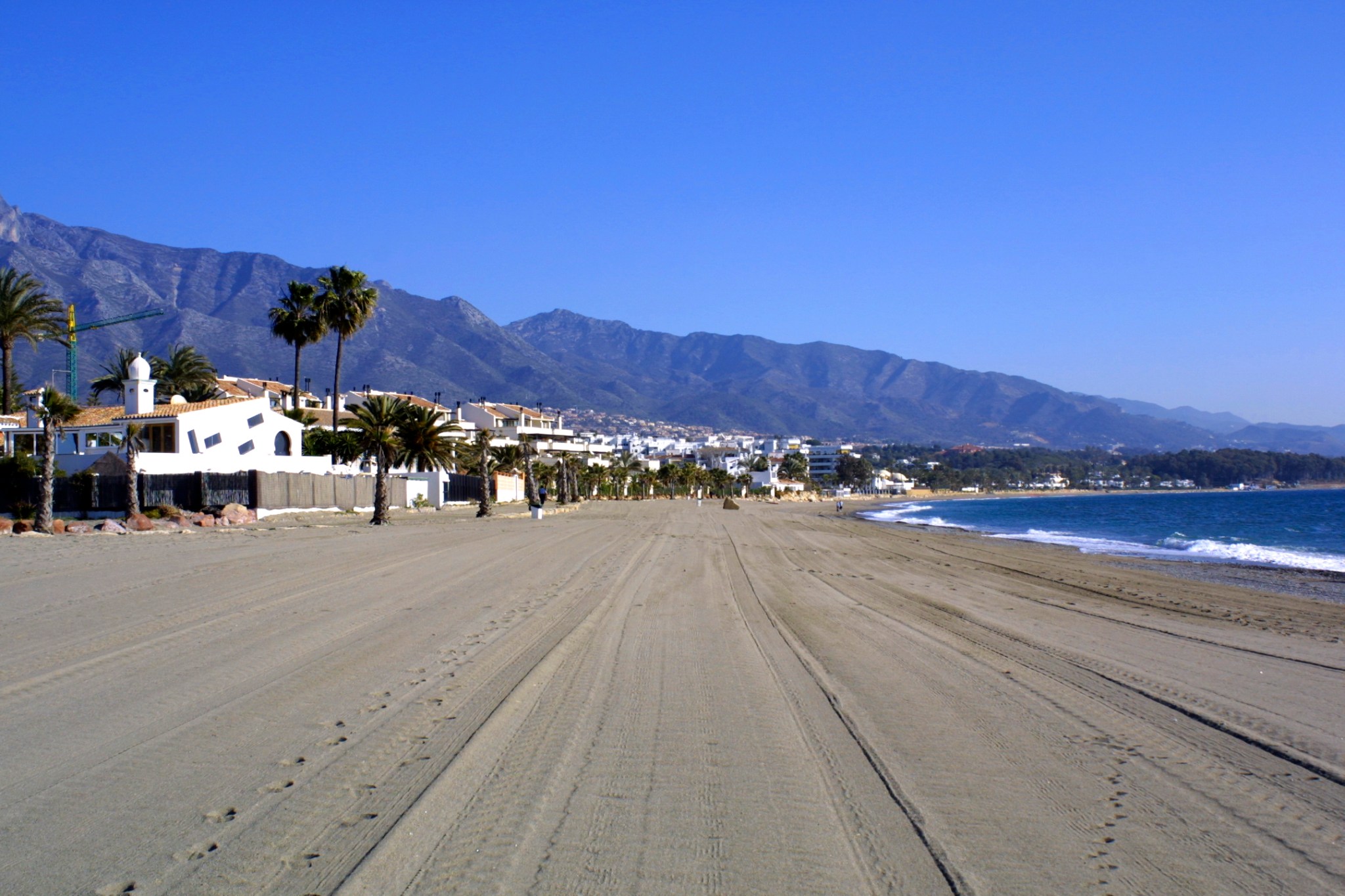
Most tourist destinations have signposts pointing to their historical sites. In Puerto Banús, near Marbella on Spain’s Costa del Sol, the signs direct visitors to Bottega Veneta, Bvlgari, Louis Vuitton and Rolex. Yachts line the waterfront, and Ferraris, Lamborghinis and Bentleys cruise the roads. For decades, Marbella has attracted international money. Europeans, particularly from the U.K. and Scandinavia, bought second homes in the area or settled permanently there in the late 20th century. So too did international fugitives seeking a safe haven from the law, giving the area an alternative moniker: the Costa del Crime. More recently, a wider range of buyers have arrived, and the region has become ostentatiously wealthy, with luxury residences and gated communities multiplying and sprawling into the surrounding hills. Now, the city wants to reinvent itself, with a “2.0” vision that positions the Costa del Sol as a Silicon Valley of Europe, with Marbella as its Palo Alto. Co-working spaces and offices are springing up alongside the apartments and high-end restaurants. “We’re helping shift the narrative around Marbella from a leisure destination to a serious hub for modern professionals,” said Christian Rasmussen, CEO of business hub The Pool. “I think that the future of Marbella is going to look very different to what it looks like now.” The Pool is situated on a coastal stretch known as the Golden Mile, a strip that runs from the center of Marbella to Puerto Banús, lined with palm trees, restaurants and luxury resorts. When Bloomberg News visited in mid-May, a large group of Finnish businessmen were deep in discussion in a glass-walled meeting room, while European and Middle Eastern entrepreneurs worked at communal desks in a space decorated with pot plants and abstract paintings on loan from a collector in Madrid. The clientele reflects the changing demographics of the city’s immigrants. The real estate market was previously dominated by middle-aged European buyers looking for second homes, but since the pandemic agents are seeing a new generation of younger buyers interested in purchasing a place where they can live and work all year-round, according to Pure Living Properties’ 2025 Marbella market report. While the dominant nationalities of international buyers remain British, Scandinavian, German, and Dutch, there has been a notable increase in interest from the United States, Canada, Poland and the Gulf states. “After the pandemic, new kinds of people and investors, hotels, came to Marbella, which has increased the quality of the place. It used to be just a pretty town. Now it’s also a city,” said Artur Loginov, chief executive officer of real estate firm Drumelia. “These past four, five years, there have been openings of new gyms, restaurants, hotels, world-known brands that have the standard of New York or Monaco.” Developers are seeking to recast the town as a year-round base for globally connected founders and investors — a toehold in Europe that offers sunshine and the sort of conveniences and accessible luxury associated with the United Arab Emirates. One recent feature of Marbella’s real estate market — similar to Dubai and Miami — is the rise of so-called branded residences, where developers pair up with high-profile athletes or fashion brands on residential projects. Tennis star Rafael Nadal partnered with designer Giorgio Armani to develop 33 ultra-luxury mansions. Dolce & Gabbana, Fendi and Karl Lagerfeld have all launched residential developments. Hotel-branded residences, offering access to hotel-style private amenities and services, have also started to emerge. While several high-end restaurants have opened recently, there is a “queue” of eateries waiting to open in Marbella, because good locations are now hard to come by, according to Mary Dunne, founder and partner at real estate company MPDunne Properties. MPDunne is currently working with a Dubai-based restaurant chain to look for a location in Marbella, but finding a space is difficult. “We are far away from a city in terms of size, the space is limited,” Dunne said. As the demographic of migrants skews younger, the infrastructure to support them has grown out. “Around 40 years ago there were maybe eleven international schools,” said Richard Sutcliffe, director of the English International College in Marbella. “Now there are more than 50.” Among the clients enrolling their children in international schools are “ultra-wealthy” families who may not live in Marbella full-time, but rely on nannies and drivers to manage the daily routines of their kids, Sutcliffe said. There has been a notable increase of families arriving from the United States, Dubai, Russia and China, he added. “Instead of attracting people who are about to retire, the talent has been attracted,” said The Pool’s Rasmussen. “I don’t believe there are many places on the planet that have this talent. I think that’s a goldmine.” Rasmussen said that at first he expects many of the newcomers to be solopreneurs in the tech sector who won’t employ local staff, but that as they gather in common spaces they’ll start to work together and build more substantial projects that will have a greater impact on the local economy. “If something is born in Marbella or Costa del Sol, then the impact will be here,” he said. “Especially once they are introduced to local entrepreneurs.” Bob van Winden moved to Marbella from Dublin after the pandemic. Originally from the Netherlands, he spent most of his career in Dublin and the San Francisco Bay area at companies including Google and Stripe. In 2024, he joined Bridge, a startup payment platform, built with stablecoins. It was acquired by Stripe in 2025. When van Winden and his family considered moving to Spain, they narrowed it down to Madrid or Marbella, ultimately choosing the latter because of its quality of life, international schools, and large expat community, he said. Van Winden believes that growing numbers of entrepreneurs are settling in the area, and capital is readily available, while advances in AI mean it’s easier than ever to start a tech company with only a handful of staff. “I think all those ingredients together, it just creates a really good breeding ground for innovation,” he said. “Once you have the important piece in place, as long as you have a good Wi-Fi connection, you can build a great company now.” The city council has worked with The Pool on projects aimed at bringing in foreign investment. Rasmussen recently went with the mayor to China to promote Marbella as a gateway into Europe. The municipal authorities have also launched an initiative, Marbellup, to teach residents how to use artificial intelligence, and in June ran an event for tech companies, Startup Olé. Many cities around the world have tried to position themselves as tech hubs, and tried to convince so-called “digital nomads” to settle and start businesses. Few have succeeded. Places do not become entrepreneurial hubs simply because they bring in startups, but rather by creating an ecosystem in which entrepreneurs, investors, universities, corporations and public institutions interact and reinforce one another, according to Josemaria Siota, executive director of the Entrepreneurship and Innovation Center at Barcelona’s IESE Business School. “The defining feature of a successful ecosystem is not simply the presence of these actors, but the strength of the interactions between them,” Siota said. The Marbella region has begun to “assemble many of the right ingredients,” he said, “but it has not yet developed into a fully mature one.” For many locals, the rapid expansion of gated communities, luxury developments and international capital have altered the social fabric of the city, leaving them feeling increasingly disconnected from the Marbella they once knew. Juan Guerrero, 70, has lived in Marbella for the past 50 years, and laments the changes to the city, which used to be a small fishing town dotted with vegetable gardens. “But that has all changed now,” he said. “You don’t have any vegetable gardens or fishermen left, and the city has completely changed. There are people everywhere, you can barely walk around, full streets have been sold off to restaurants, and local shops have closed doors and been replaced by chains.” Guerrero lives in Marbella’s old quarter, and said that over the years the houses in the area have increasingly been turned into restaurants, shops or small hotels. Every so often, he will get a letter from a real estate agency offering him €300,000 ($343,000) for his home. He’s not willing to sell, he said. “Especially as it is increasingly difficult to find affordable housing.” The price of housing for sale in Marbella has soared, with the average price per square meter rising by approximately 74% over the past five years, increasing from €3,225 in June 2021 to €5,608 in June 2026, according to Idealista data. In Marbella Pueblo, prices rose 21.8% to €5,403 per square meter in June from a year earlier. In recent years, Marbella has seen reports of gang-related violence, including shootings in restaurants and night clubs, as well as drug interceptions at sea. Authorities have linked some of these incidents to transnational criminal networks operating in the region. Antonio Garcia, a taxi driver in his late thirties, said that there is “Marbella by day and Marbella by night.” During the day it functions as normal; at night, drug activity and crime become more visible. He has a two-year-old child and is considering moving somewhere smaller to get away from the growing insecurity in Marbella. “The essence of what Marbella used to be has been lost over the years, with more and more wealth coming in and changing the atmosphere,” he said. “Down the line as my kid gets older I am looking to move to somewhere more family-friendly. ” This story was originally featured on Fortune.com
How outlets are framing the same story
Here's how each outlet is covering the story — compare their headlines and timing at a glance.
- Coverage card1 outlet1CoverageScouting report
Millionaires’ playground Marbella wants to become a tech hub
Sources1TypeCoverageFortune