
Food banks confront growing SNAP gap
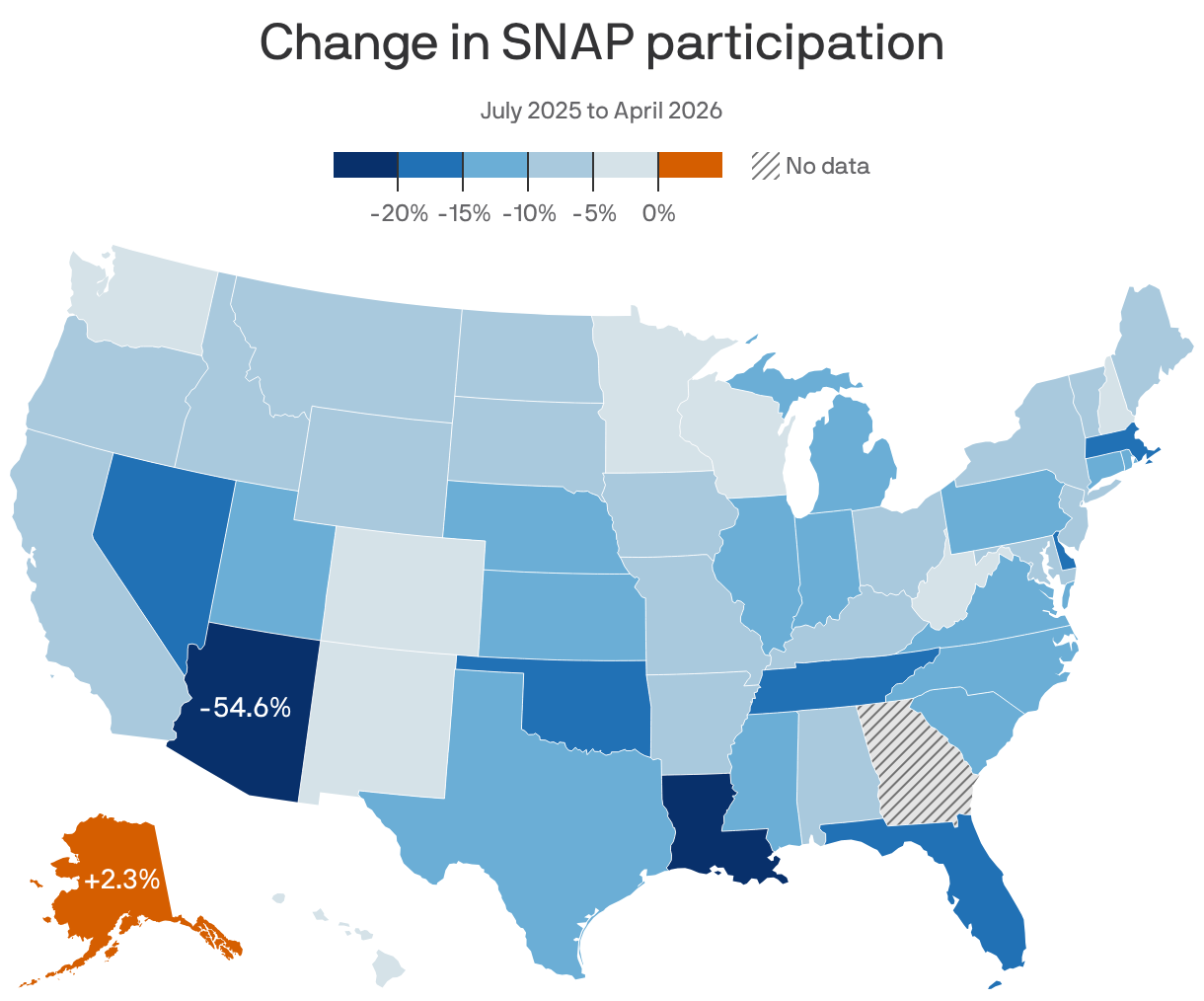
Data: CBPP; Map: Sara Wise/AxiosAmerican food assistance has been rocked by a regulatory earthquake while millions have been dropped from one of the nation's premier safety net programs, tightening the strain on food banks and state agencies.The big picture: As the Supplemental Nutrition Assistance Program (SNAP) continues to undergo a historic remolding, food banks say they're staring down a gap they can't fill."We've been operating kind of in emergency management mode," says Terri Shoemaker, the executive vice president of the Arizona Food Bank Network. "At some point, that will fatigue."By the numbers: The Center on Budget and Policy Priorities estimates that SNAP participation fell by more than 4.5 million people between the July 2025 enactment of the One Big Beautiful Bill and April 2026, citing USDA and state-level data.The organization estimates the number of children receiving SNAP has likely fallen by more than 1.5 million.State of play: To meet increased demand, food banks are purchasing record levels of food, expanding application assistance and working with farmers and retailers to find additional supply sources, Feeding America CEO Denis McDonough says.But SNAP changes are colliding with high prices, he tells Axios, leaving food banks bracing for as much or more demand than last fall's government shutdown."The decline in SNAP participation is not necessarily evidence that fewer people need help," he says.
Reported by 1 outlet — Axios. See all sources ↓
Data: CBPP; Map: Sara Wise/AxiosAmerican food assistance has been rocked by a regulatory earthquake while millions have been dropped from one of the nation's premier safety net programs, tightening the strain on food banks and state agencies.The big picture: As the Supplemental Nutrition Assistance Program (SNAP) continues to undergo a historic remolding, food banks say they're staring down a gap they can't fill."We've been operating kind of in emergency management mode," says Terri Shoemaker, the executive vice president of the Arizona Food Bank Network. "At some point, that will fatigue."By the numbers: The Center on Budget and Policy Priorities estimates that SNAP participation fell by more than 4.5 million people between the July 2025 enactment of the One Big Beautiful Bill and April 2026, citing USDA and state-level data.The organization estimates the number of children receiving SNAP has likely fallen by more than 1.5 million.State of play: To meet increased demand, food banks are purchasing record levels of food, expanding application assistance and working with farmers and retailers to find additional supply sources, Feeding America CEO Denis McDonough says.But SNAP changes are colliding with high prices, he tells Axios, leaving food banks bracing for as much or more demand than last fall's government shutdown."The decline in SNAP participation is not necessarily evidence that fewer people need help," he says. that the program has become harder for eligible people to access it."Plus, persistently high prices mean "people who aren't otherwise eligible for SNAP are also now reliant on the charitable food system."What they're saying: "SNAP is a means tested, appropriated entitlement. If a household is eligible, they receive the benefit," a USDA spokesperson told Axios in a statement.
Read the full report at Axios ↗
Why it matters
A world story we're tracking; its significance and source trust firm up as more outlets confirm it.
- What's the story?
- Data: CBPP; Map: Sara Wise/AxiosAmerican food assistance has been rocked by a regulatory earthquake while millions have been dropped from one of the nation's premier safety net programs, tightening the strain on food banks and state agencies.The big picture: As the Supplemental Nutrition Assistance Program (SNAP) continues to undergo a historic remolding, food banks say they're staring down a gap they can't fill."We've been operating kind of in emergency management mode," says Terri Shoemaker, the executive vice president of the Arizona Food Bank Network. "At some point, that will fatigue."By the numbers: The Center on Budget and Policy Priorities estimates that SNAP participation fell by more than 4.5 million people between the July 2025 enactment of the One Big Beautiful Bill and April 2026, citing USDA and state-level data.The organization estimates the number of children receiving SNAP has likely fallen by more than 1.5 million.State of play: To meet increased demand, food banks are purchasing record levels of food, expanding application assistance and working with farmers and retailers to find additional supply sources, Feeding America CEO Denis McDonough says.But SNAP changes are colliding with high prices, he tells Axios, leaving food banks bracing for as much or more demand than last fall's government shutdown."The decline in SNAP participation is not necessarily evidence that fewer people need help," he says.
- How widely is it covered?
- 1 outlet, average source rating 7.0/10.
- When was it last updated?
- 11m ago.
How outlets are framing the same story
Here's how each outlet is covering the story — compare their headlines and timing at a glance.
- Coverage card1 outlet1CoverageScouting report
Food banks confront growing SNAP gap
Sources1TypeCoverageAxios