
Clarence Thomas' constitutional argument against federal gun law gets first major court test
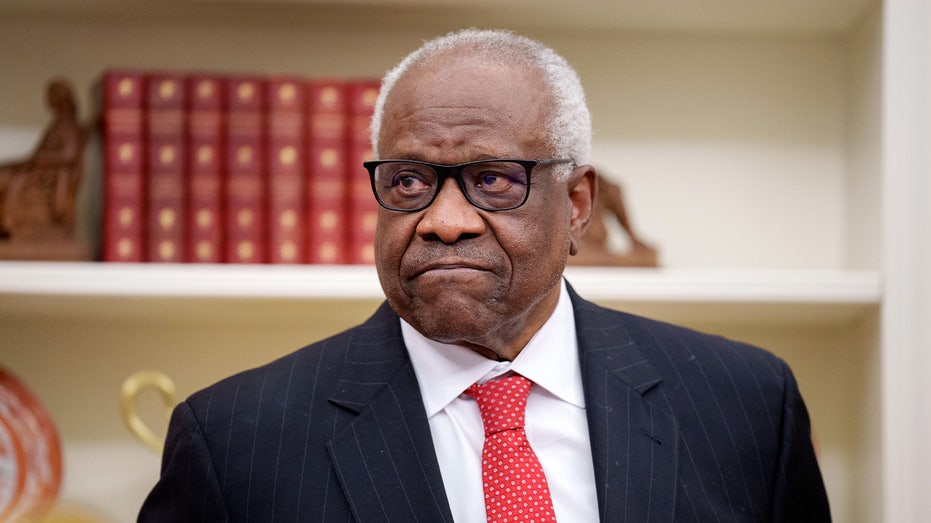
A convicted heroin trafficker's appeal could upend one of the federal government's most-used gun laws after a federal appeals court agreed to reconsider its constitutional foundation, weeks after Justice Clarence Thomas urged lower courts to take a fresh look at whether Congress had the authority to enact it.The full Fifth Circuit Court of Appeals voted Monday to rehear United States v. Squire, a case that could determine whether Congress exceeded its constitutional authority when it enacted the federal law making it a crime for convicted felons to possess firearms.The case stems from an appeal by convicted felon Curtis Squire, who was charged after police found a handgun in his New Orleans home while executing a search warrant.
Reported by 1 outlet — Fox News Latest. See all sources ↓
A convicted heroin trafficker's appeal could upend one of the federal government's most-used gun laws after a federal appeals court agreed to reconsider its constitutional foundation, weeks after Justice Clarence Thomas urged lower courts to take a fresh look at whether Congress had the authority to enact it.The full Fifth Circuit Court of Appeals voted Monday to rehear United States v. Squire, a case that could determine whether Congress exceeded its constitutional authority when it enacted the federal law making it a crime for convicted felons to possess firearms.The case stems from an appeal by convicted felon Curtis Squire, who was charged after police found a handgun in his New Orleans home while executing a search warrant. While his appeal began as a Second Amendment challenge, the case has evolved into a broader question: whether Congress had the constitutional authority under the Commerce Clause to criminalize firearm possession by convicted felons at all.SUPREME COURT UNANIMOUSLY LIMITS USE OF GUN LAW USED TO PROSECUTE HUNTER BIDENThe appeals court's decision marks a significant shift in the case and the first major appellate response to Thomas' recent concurrence in United States v. Hemani, in which he urged courts to reconsider the constitutional foundation of federal law.For decades, courts have upheld the law because Congress has the power to regulate interstate commerce, even if the only connection is that the gun crossed state lines before the defendant possessed it.But Thomas argued that goes too far, writing in Hemani that the Commerce Clause authorizes Congress only "to regulate the buying and selling of goods and services trafficked across state lines," not "activities wholly separated from business, such as gun possession."MAJOR APPEALS COURT DECLARES NEW JERSEY AR-15 BAN UNCONSTITUTIONAL IN LANDMARK SECOND AMENDMENT RULINGHe also rejected the long-standing theory that Congress may regulate firearm possession simply because the firearm once moved in interstate commerce."Congress cannot regulate the possession of every thing that ever traveled across state lines," Thomas wrote, warning that such an interpretation risks converting Congress' limited commerce authority into "a general police power of the sort retained by the States."He concluded that the issue "merits a closer look in an appropriate case.""The Court, and lower courts, should revisit the constitutionality of §922(g)," Thomas wrote.The Fifth Circuit's decision to rehear Squire suggests at least some judges agree that question warrants fresh consideration, though the move sharply divided the court.Judge Stephen Higginson, who dissented, warned the case has evolved from a narrow Second Amendment dispute into a much broader challenge to Congress' power under the Commerce Clause, one that could have far-reaching consequences for federal law.INSIDE TRUMP'S UNPRECEDENTED BATTLE PLAN TO EXPAND SECOND AMENDMENT RIGHTS THROUGH JUSTICE DEPARTMENTHe said striking down Section 922(g) would be "a significant departure from existing, settled, and binding Commerce Clause jurisprudence" and could "mark the start of a new, severely contracted Commerce Clause era.""Can the federal government no longer criminalize possession of child pornography?
Read the full report at Fox News Latest ↗
Why it matters
A world story we're tracking; its significance and source trust firm up as more outlets confirm it.
- What's the story?
- A convicted heroin trafficker's appeal could upend one of the federal government's most-used gun laws after a federal appeals court agreed to reconsider its constitutional foundation, weeks after Justice Clarence Thomas urged lower courts to take a fresh look at whether Congress had the authority to enact it.The full Fifth Circuit Court of Appeals voted Monday to rehear United States v. Squire, a case that could determine whether Congress exceeded its constitutional authority when it enacted the federal law making it a crime for convicted felons to possess firearms.The case stems from an appeal by convicted felon Curtis Squire, who was charged after police found a handgun in his New Orleans home while executing a search warrant.
- How widely is it covered?
- 1 outlet, average source rating 6.0/10.
- When was it last updated?
- 15m ago.
How outlets are framing the same story
Here's how each outlet is covering the story — compare their headlines and timing at a glance.
- Coverage card1 outlet1CoverageScouting report
Clarence Thomas' constitutional argument against federal gun law gets first major court test
Sources1TypeCoverageFox News Latest